
Guides · shed and pool room
Gas bottles, pool chemicals, petrol and aerosols: what to do with each before moving day
Most removalists won't carry a BBQ gas bottle unless a certified test station has certified it purged, mowers need their petrol drained, and pool chemicals, aerosols and big lithium batteries need sorting too, so before moving day you either use them up, carry them yourself within the NSW limits, or take them to the EPA's Household Chemical CleanOut.
Before moving day, four of the awkward things in a shed or pool room can go to one place. By our count, AFRA lists six items as needing special attention: gas BBQs, pool chemicals, garden equipment containing flammable liquids, fire extinguishers, plants and animals. Four of those match what the EPA's Household Chemical CleanOut accepts: gas bottles, pool chemicals, motor fuels and fire extinguishers. CleanOut is a free drive-thru service (checked October 2026), and it takes up to 20 litres or 20 kilograms of a single item.
That covers letting go. If you would rather keep things, the rules differ by item. A BBQ gas bottle goes on a removalist's truck only with a purge certificate. Mowers need the petrol drained. Pool chlorine and acid are best kept in segregated compartments or boxes. At St Ives Removals, our advice is to deal with each one well before the truck turns up. Here is how.
What can't removalists move?
| Item | What the source says | What to do before moving day |
|---|---|---|
| BBQ gas bottle | AFRA says a removalist will not carry it unless you provide a certificate from a Gas Cylinder Test Station certified by Standards Australia stating it has been purged; AFRA ineligible items NSW Fair Trading says most removalist companies won't transport gas cylinders NSW Fair Trading | Get it certified gas free, exchange it where a supplier offers that, dispose of it, or carry it yourself within the NSW limits |
| Pool chemicals | AFRA lists them as needing special attention; AFRA ineligible items EPA says chlorine and acids "can react dangerously in an incident" NSW EPA | Use them up, take them to CleanOut (up to 20 litres or 20 kilograms of a single item), or carry them yourself, kept apart EPA CleanOut |
| Petrol mower and garden equipment | AFRA says drain the petrol, and steam clean too if it goes interstate or into storage AFRA ineligible items | Drain it; CleanOut accepts motor fuels EPA CleanOut |
| Aerosol cans | AFRA says don't pack aerosol cans AFRA dos and don'ts | Use them up, and ask your removalist |
| Fire extinguishers | AFRA lists them as needing special attention AFRA ineligible items | Ask your removalist; CleanOut accepts them EPA CleanOut |
| Lithium batteries over 100Wh | An AFRA LinkedIn post says "we are no longer accepting" them in household removals and they must not go in boxes AFRA on LinkedIn | Check the Wh rating on the label, ask your removalist, arrange separate transport |
AFRA, the removalists' industry association, sorts the problem items into two groups. The first group needs special attention. The second is ineligible: prohibited dangerous goods, plants (a certificate may be required), animals, collections and special-interest items (depending on company policy), and items in unclean condition.
AFRA's moving guide adds: don't pack ammunition, aerosol cans and other explosive items. NSW Fair Trading is blunt about gas: "Most removalist companies won't transport gas cylinders."
Company policy decides several of these, so for any one item the honest answer is to ask the removalist you book.
Can I move a BBQ gas bottle?
Yes, but probably not on the truck as it is. AFRA says a removalist will not carry a BBQ gas cylinder unless you provide a certificate from a Gas Cylinder Test Station certified by Standards Australia, stating the cylinder has been purged.
You have four ways to handle it.
Get it certified. To keep a cylinder, Fair Trading says you can have it certified gas free by a gas supplier or approved cylinder test station.
Swap it. If you are changing cities, some suppliers run an exchange: you surrender the cylinder in one city and get a replacement voucher in another.
Let it go. Cylinders can be disposed of at approved gas cylinder test stations, some council recycle centres and some gas suppliers, and CleanOut accepts gas bottles.
Carry it yourself. The rules for this are in the next section.
Don't burn off the gas or let it out into the air to empty the bottle, because gas is heavy and does not dissipate and an explosion becomes "a distinct possibility".
Before you pay to certify or move an old bottle, check its test mark. A BBQ-size refillable cylinder needs a current, legible test mark from a certified test station before it can be filled. The retest interval is 10 years, and a cylinder not tested for 10 years or more should not be connected to an appliance. And whichever way you go, don't refill your own cylinder.
A certificate means a trip to a test station, so we would sort the bottle at least a week before the move.
How do I carry a gas bottle in my own car?
- Remote locking
- Lighter
- Radio
- Wipers
- Leaked LPG is heavier than air and settles in low spots
- Upright and strapped in the boot
- POL valve plugged
- Main valve closed
- Regulator removed
| Source | What it says | Where it applies |
|---|---|---|
| NSW Fair Trading | "up to 2 cylinders (totalling 9 kg or less) at a time"; "Don't carry a cylinder greater than 9 kg" NSW Fair Trading | in an enclosed vehicle |
| NSW EPA example | "1 x 9 kg and 1 x 4 kg" NSW EPA | in the space connected to the passenger compartment, including the boot |
The two pages are worded differently: use the stricter, and check with your gas supplier.
Two NSW pages word the limit differently. Fair Trading says don't carry a cylinder over 9 kg in an enclosed vehicle, and carry up to 2 cylinders totalling 9 kg or less at a time. The EPA's example is no more than 1 x 9kg and 1 x 4 kg gas bottles in the space connected to the passenger compartment, including the boot.
Added up, the EPA example comes to 13 kg against Fair Trading's 9 kg total. That is our arithmetic: 9 kg plus 4 kg. Work to the stricter one: 9 kg or less in total, no single cylinder over 9 kg, in an enclosed car. Check with your gas supplier too.
How you load it matters as much as how much. Fair Trading says to secure cylinders upright, preferably in the boot, with a plug firmly fitted in the POL valve. The EPA says to make sure the main cylinder valve is closed, and to consider removing the regulator if it could be wrenched off.
The reason is in the physics. Building Commission NSW says LPG is heavier than air, so it settles in low spots. Explosions and fires have happened when cylinders were carried or left in closed vehicles. A spark from remote locking, the wipers, the radio or a lighter can ignite a leak.
These EPA personal-use limits don't apply if you transport goods as a business or exceed the limits, and they cover transport only, not use.
How do I get rid of pool chemicals before moving?
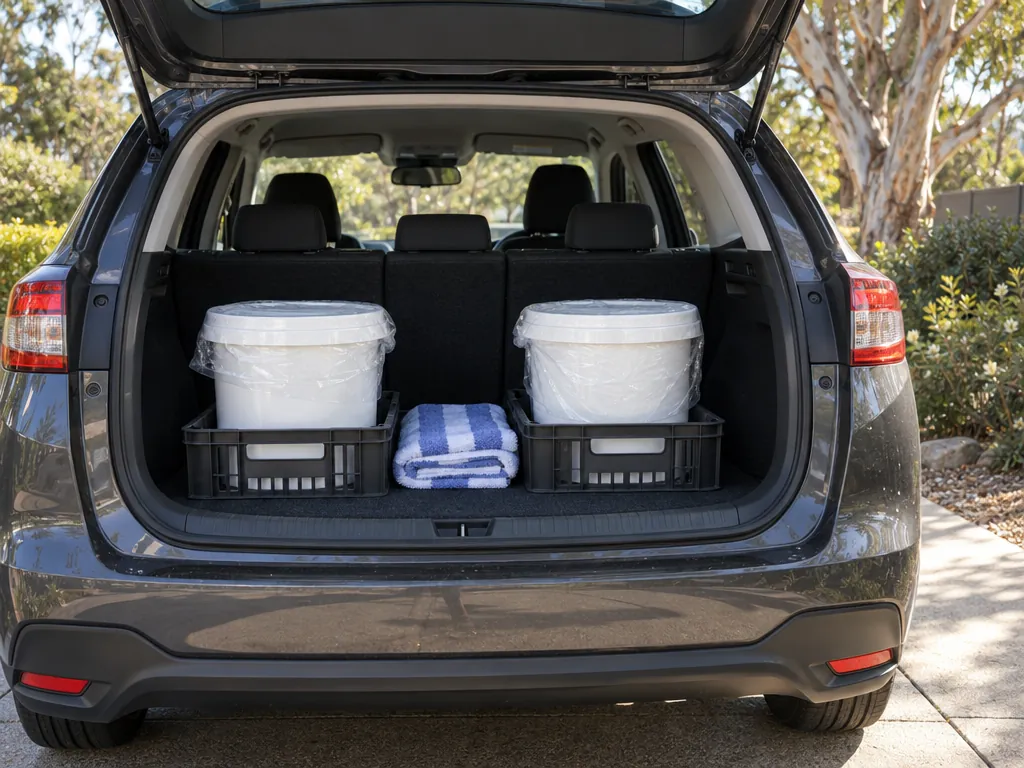
Start by using them. A last few weeks of normal dosing clears half-empty tubs better than any drop-off.
What's left can go to CleanOut, which accepts pool chemicals but not business quantities. Sydney events are open to all NSW residents. Check the EPA page for the next event near you before you load up.
On the drive, follow the CleanOut transport tips:
- Keep chemicals in their original containers, labelled and sealed.
- Never mix chemicals.
- Wrap liquid containers and stand them in a bucket or tray.
- Keep them in the boot, away from passengers.
You must also stay in your vehicle on site.
If you are moving the chemicals to the new house yourself, keep chlorine and acid apart. The EPA says pool chlorine (division 5.1) and acids (class 8) can react dangerously in an incident, so load carefully and consider segregated compartments or boxes.
What do I do with petrol, mowers and garden equipment?
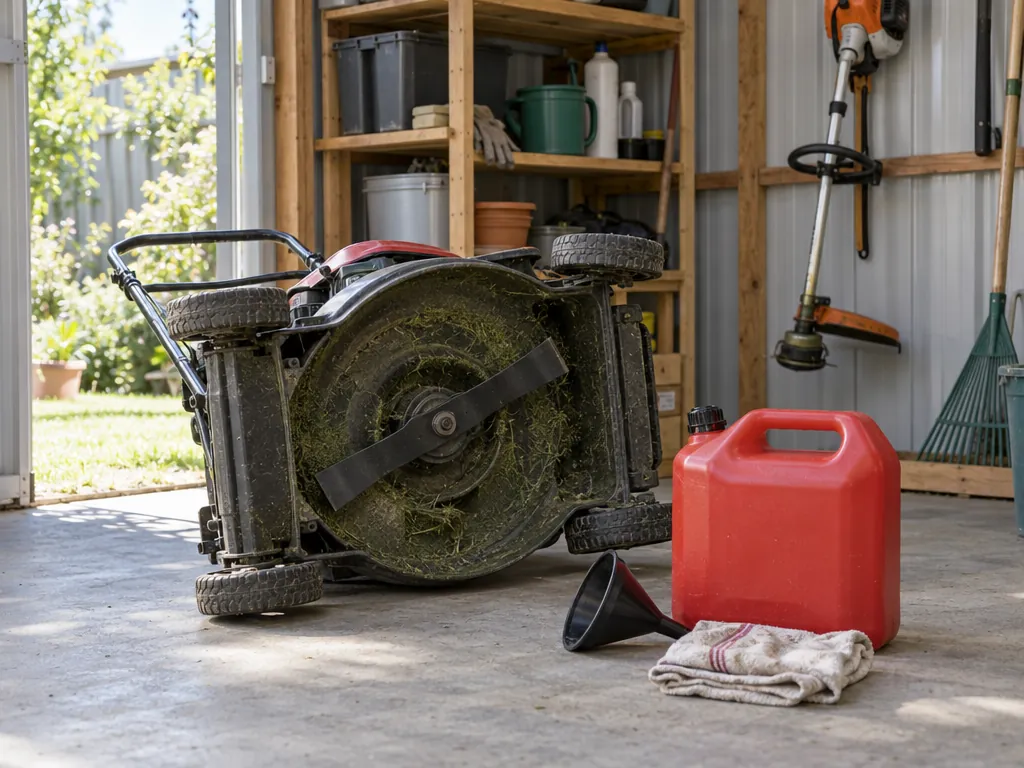
Drain them. AFRA says lawnmowers and garden equipment should have the petrol drained. If they are going interstate or into storage, they also need steam cleaning. AFRA's moving guide puts it simply: empty all petrol-powered items safely.
Run the mower dry on a last cut of the lawn, then drain what remains into a proper fuel container. Spare fuel you don't need can go to CleanOut, which accepts motor fuels.
A word on the law versus common sense. The EPA's personal-use exemption allows no more than 250 L in a space connected to the passenger compartment for petrol in jerrycans. That is a legal ceiling for the exemption, not a sensible load for a family car on moving day. A household move needs a small fraction of it, or none at all.
If your garden tools are heading interstate, our interstate removalists checklist covers the rest of that move.
What about aerosols, fire extinguishers and big batteries?
Aerosols. AFRA's advice is don't pack aerosol cans. Use up sunscreen, fly spray and spray paint in the weeks before. Ask your removalist about anything left over.
Fire extinguishers. AFRA lists them as needing special attention. Ask before you pack one. CleanOut accepts fire extinguishers, and paint too, though paint limits vary by event.
Big lithium batteries. These are the newest item on the list. In a LinkedIn post, AFRA said that lithium batteries over 100Wh are subject to dangerous goods transport rules, that "we are no longer accepting" them in household removals, and that they must not go in boxes.
The post names:
- portable power stations
- e-bike and e-scooter batteries
- large power-tool batteries
- home or solar storage batteries
It says customers should check the Wh rating on the label and sign an uplift declaration. Read it as AFRA's stated position, and ask the removalist you book what their own rule is.
What should I ask my removalist before booking?
- AFRA ineligible items
- AFRA ineligible items
- AFRA ineligible items
- AFRA ineligible items
- AFRA on LinkedIn
- AFRA ineligible items
- NSW Fair Trading
AFRA notes that some categories, such as collections and special-interest items, depend on company policy. So ask early, while there is still time to make other arrangements. Ask about:
- the gas bottle
- pool chemicals and fire extinguishers
- plants, which may need a certificate
- collections
- batteries, and whether there is a declaration to sign
- cleaning rules for anything going into storage or interstate
Ask about cover while you are at it. NSW Fair Trading says removalists are not required by law to insure your property during a move, and most only insure their vehicle. For what travels on the truck, see our guides on packing fragile and valuable items and what to do if a removalist damages your furniture.
Which numbers should I keep handy?
- BBQ gas in an enclosed car: up to 2 cylinders, 9 kg or less totalNSW Fair Trading
- EPA example, space connected to the passenger compartment including the boot: 1 x 9 kg and 1 x 4 kgThe pages differ: use the stricterNSW EPA
- Refillable BBQ cylinder retest interval: 10 yearsBuilding Commission NSW
- CleanOut limit per single item: 20 litres or 20 kilogramsEPA CleanOut
- Lithium batteries an AFRA post says are not accepted in household removals: over 100WhAFRA on LinkedIn
Five figures do most of the work:
- BBQ gas in an enclosed car: up to 2 cylinders, 9 kg or less total.
- The EPA example: 1 x 9 kg and 1 x 4 kg in the space connected to the passenger compartment. Because the two pages differ, work to the stricter.
- Cylinder retest interval: 10 years.
- CleanOut limit: 20 litres or 20 kilograms per single item.
- Lithium batteries: over 100Wh is the size AFRA's post says is not accepted in household removals.
Booking your move once the shed is sorted
Walk the shed, the garage and the pool area with a notepad. Write down every gas bottle, tub, jerrycan, spray can and battery pack, and decide for each one whether it is used up, certified, dropped off or coming in your car. Our move planner is a good place to slot those jobs into the weeks before the truck arrives.
Then bring that list when you ask St Ives Removals for a quote. Mentioning the gas bottle and the e-bike up front means the question of what goes on the truck is settled before moving day, not on the driveway.
Sources
- https://afra.com.au/moving/moving-tips/ineligible-items
- https://afra.com.au/moving/moving-tips/moving-dos-and-donts
- https://www.nsw.gov.au/legal-and-justice/consumer-rights-and-protection/safety/gas-safety-requirements-and-consumer-rights/gas-cylinder-safety
- https://www.epa.nsw.gov.au/Your-environment/Dangerous-goods/Dangerous-goods-as-tools-of-trade-personal-use
- https://www.nsw.gov.au/housing-and-construction/compliance-and-regulation/gasfitters/dangers-of-exposure-to-lpg
- https://www.epa.nsw.gov.au/Your-environment/Recycling-and-reuse/household-recycling-overview/household-chemical-cleanout
- https://www.linkedin.com/posts/australian-furniture-removers-association_important-change-lithium-batteries-over-activity-7518137187310161920-7OU7
- https://www.nsw.gov.au/legal-and-justice/consumer-rights-and-protection/be-a-smart-consumer/choosing-a-removalist