Why we behave like a drawing set
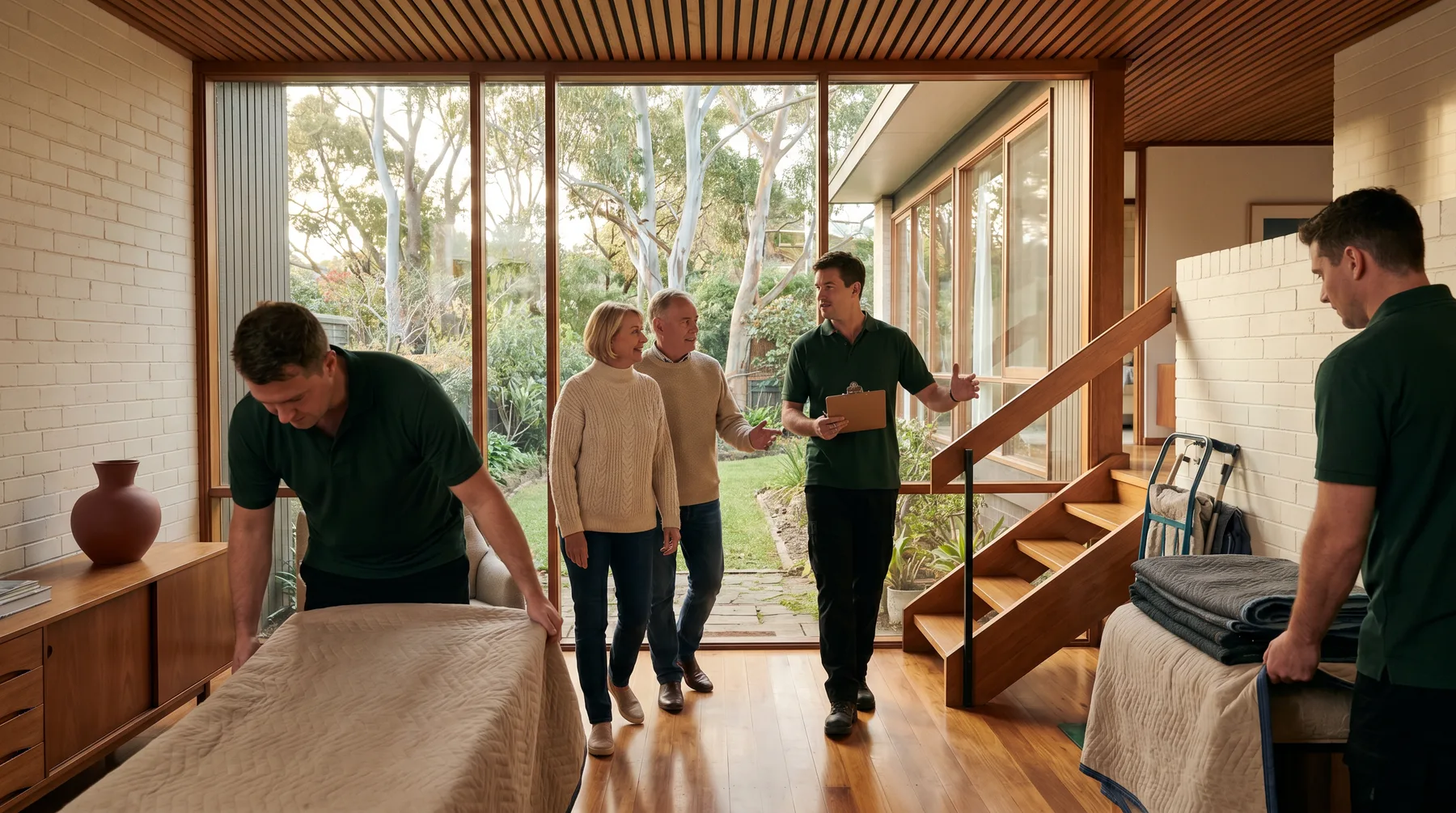
The houses taught us the manner. Spend enough days inside split-levels and glass pavilions and you absorb the way they were made: measured, sequenced, nothing decorative that is not doing work. A move run the same way, counted first, written down, executed in order, is calmer for everyone standing inside it. So the plan is our product; the truck is just how the plan gets delivered.
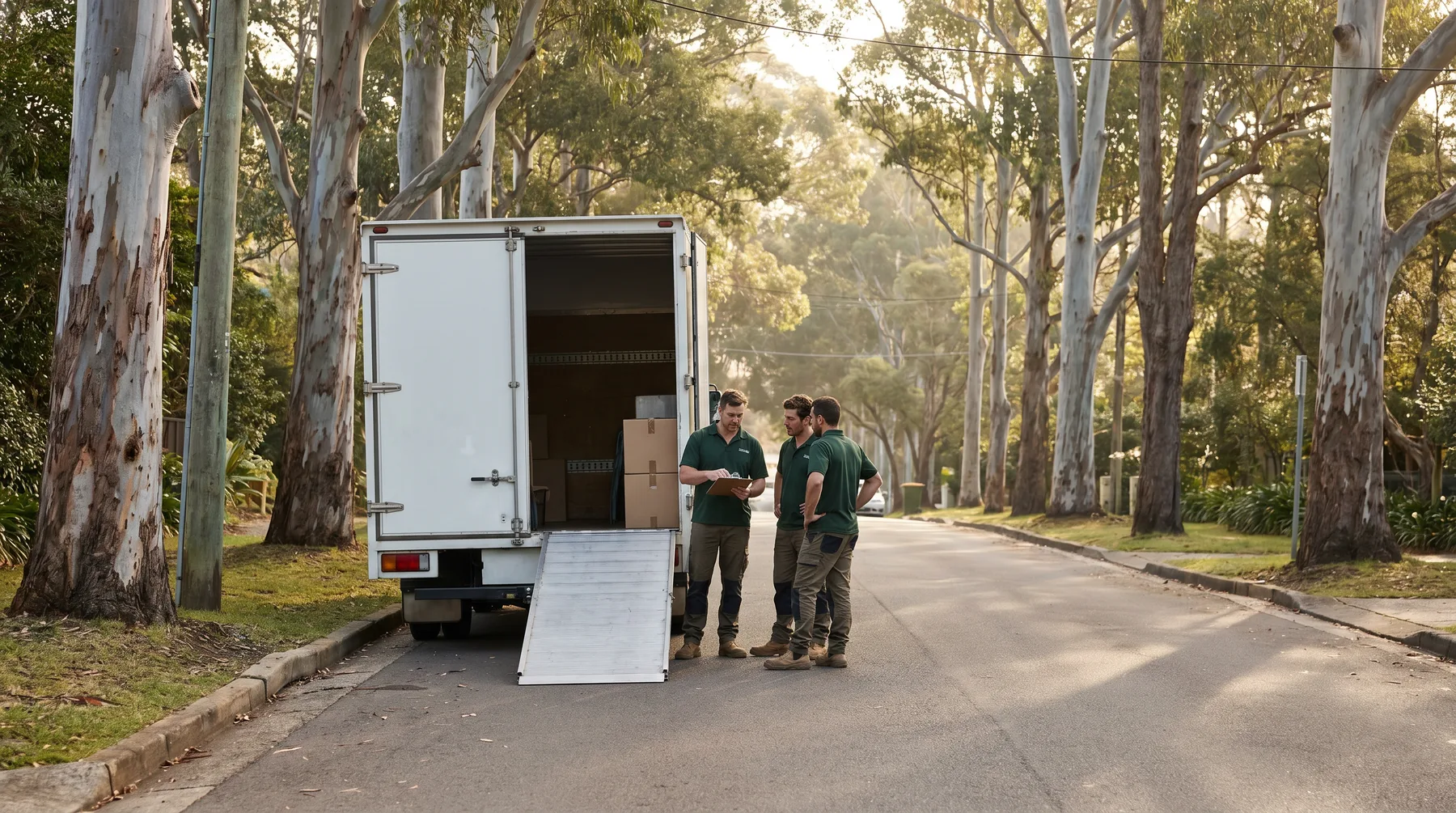
It shapes small things too. We would rather send three movers who have read the plan than five who have not. We stage at landings instead of racing stairs. We tell you at the walkthrough when a piece will not fit, not on the day. And when a job is not ours, interstate linehaul, say, we name who should do it instead of doing it badly.
What we ask of a crew
- Count before carrying. Every route walked before anything heavy commits to it.
- The house is a client. Glass, timber and gardens get the same protection standard as the furniture.
- One voice on the stairs. Whoever calls the treads is the only person talking until the piece lands.
- Patience beats pace. Especially in long-tenure houses, where a drawer can turn out to be forty years of letters.
- Say the true thing early. A problem named at the walkthrough is a plan; the same problem named on the driveway is an argument.
The honest edges
We publish our three crews and their rates and nothing else, because those are the numbers that are true for everyone. We work by callback rather than a phone line, so the person who rings has read your enquiry. And we would rather show you method than adjectives, which is why the guides give away exactly how we work: take them and use them on anyone.