Guides · protection
Glass walls and timber floors: protection before carrying
The interiors that make these houses worth owning, walls of glass, floors of tallowwood, balustrades someone shaped by hand, are exactly the surfaces a careless move marks first. Protection is not padding thrown down while the truck idles; it is a sequence, and the sequence is the point.
The order: dress the house before you undress it
The rule that sorts serious crews from hopeful ones is simple: the protection run finishes before the first carton lifts. Board, felt and guards go on while the house is still full and calm, because fitting protection around moving furniture is how both get damaged. On our jobs it is a named step in the written plan with its own half hour, and it comes off last, on the way out.
Glass: board it, then forget it
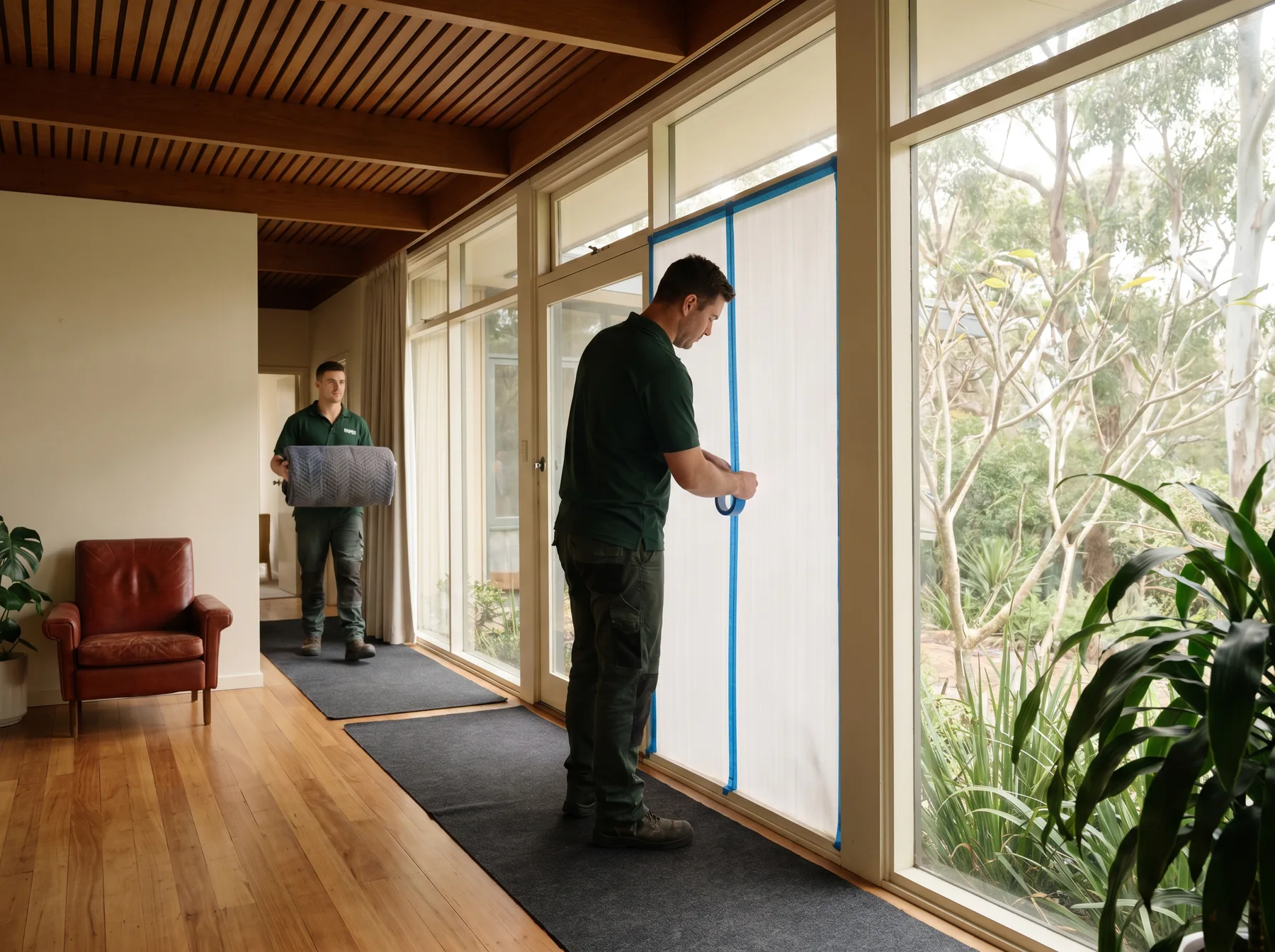
Floor-to-ceiling glass on a carry route cannot be "carefully avoided" for six hours; attention runs out before the day does. It gets a physical answer instead: corflute sheet over the pane, taped at the frame, never to the glass face itself, so the tape's grip and the sun's heat stay off the surface. Boarded properly, the glass stops being a hazard the crew thinks about and becomes a wall. That mental unloading, honestly, is half the value.
- Every pane on the route gets board; panes off the route get a standing margin instead: nothing stages, leans or rests within a metre of unboarded glass.
- Sliding panels that will be used as an exit get their tracks protected too; grit in a fifty-year-old track is a repair, not a sweep.
- Louvres and original thin float glass, common in unrenovated mid-century homes, get named in the plan; they take board differently and deserve to be treated as the originals they are.
Timber: felt underfoot, wrap at hip height
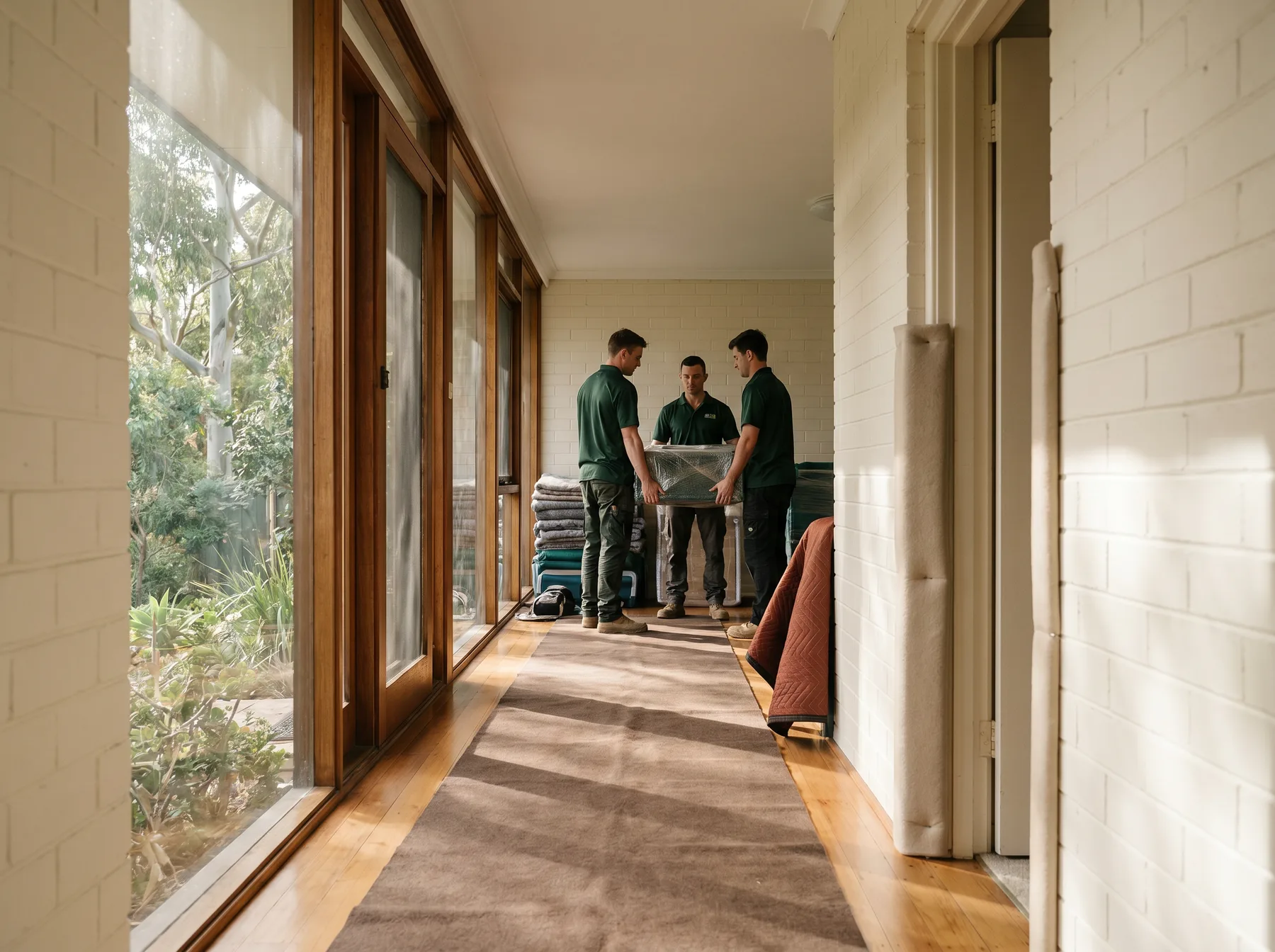
Polished boards take their damage from two directions: grit ground in underfoot, and corners swung at hip height. So the answer has two parts. Felt runners lay a continuous path from the furthest room to the exit, every tread and landing included, laid on swept floors so the runner is not the thing holding the grit. And the timber the house cannot take off, newel posts, balustrades, exposed door frames, gets wrapped and guarded like furniture, because a gouge in a shaped hardwood rail is cabinet-maker work to repair, not a touch-up pen.
And the furniture itself
Blanket-wrap on everything with a finished surface, stretch film over the blankets on anything that will see the outside air, and the long pieces carried one at a time on the stairs. The furniture side is standard removalist craft; the house side above is the part this suburb specifically needs, and the part worth interrogating anyone about. The five questions to ask are in the split-level guide.
The short version: protection is a scheduled step with an order: glass boarded, floors felted, timber wrapped, then and only then the carry. It is all listed in the written move plan, which is where you check it before booking anyone.